crsugadev

E-commerce Evolution: Turning Casual Window Shoppers into Loyal Buyers

The hard truth about e-commerce: getting traffic to your store is the easy part. Turning that traffic into paying customers — and then turning those customers into loyal, repeat buyers — is where most online stores struggle. The global average e-commerce conversion rate sits at just 2–4%. That means 96–98% of your visitors are leaving without buying. But with the right optimisations, that number can shift dramatically. Here’s how to turn your e-commerce platform into a conversion machine. Fix the User Flow First Before you spend another rupee on ads, audit your user journey from landing page to checkout. Common flow-breakers include: A streamlined, intuitive user flow removes friction at every stage and guides visitors naturally towards purchase. Optimise Your Product Pages for Conversion Your product page is your digital sales floor. It needs to do the heavy lifting of both informing and persuading. High-converting product pages share several traits: Every element on the page should move the visitor closer to the ‘Add to Cart’ button. Streamline the Checkout Process Cart abandonment averages around 70% across e-commerce stores globally. The checkout process is where hesitant buyers become lost customers. To minimise abandonment: Build Loyalty Through Post-Purchase Experience The sale isn’t the end of the customer relationship — it’s the beginning. Brands that win at retention treat every purchase as the start of an ongoing conversation. Strategies that build genuine loyalty include: Increasing customer retention by just 5% can boost profits by 25–95%, according to research from Bain & Company. Loyalty isn’t a nice-to-have — it’s your most profitable growth lever. Personalisation at Scale Modern e-commerce customers expect experiences tailored to them. Using customer data intelligently — browsing history, past purchases, location, and behaviour patterns — you can deliver personalised product recommendations, dynamic pricing, and targeted promotions that feel relevant rather than intrusive. Personalisation can increase e-commerce revenue by 10–15% and significantly improve customer satisfaction scores. Ready to Transform Your E-commerce Performance? At Augmetry Technologies, we specialise in building and optimising e-commerce platforms that convert visitors into customers and customers into advocates. From UX audits and checkout optimisation to personalisation engines and loyalty system integration, we have the expertise to elevate your online store. Let’s turn your e-commerce potential into e-commerce performance.

E-commerce Evolution: Turning Casual Window Shoppers into Loyal Buyers Read More »

Taking the Leap: A No-Nonsense Guide to High-ROI Digital Marketing

Digital marketing can feel like alphabet soup — SEO, PPC, CRO, CTR, ROAS. Agencies love complexity. But the truth is, effective digital marketing isn’t complicated. It’s strategic, measurable, and when done right, it’s the most powerful growth engine available to any business, regardless of size or budget. This is your no-nonsense guide to cutting through the noise and running campaigns that actually work. Start With the Right Foundation: Know Your Audience Every high-ROI campaign starts not with ads or content, but with clarity. Who are you trying to reach? What problem are they trying to solve? Where do they spend time online? A detailed customer avatar — including demographics, pain points, goals, and online behaviour — is the single most valuable asset in your marketing toolkit. Without this foundation, you’re spending money on traffic that will never convert. Choose Channels Strategically, Not Impulsively Not every platform is right for every business. The key is alignment: The mistake most businesses make is trying to be everywhere at once. Start with one or two channels, master them, then expand. Set Campaigns Up for Measurement You cannot optimise what you cannot measure. Before launching any campaign, define your key metrics: With clear benchmarks, every campaign decision becomes data-driven rather than guesswork. The Power of Testing and Iteration The best digital marketers aren’t the cleverest — they’re the most systematic. They test headlines, images, audiences, landing pages, and calls to action. They kill what doesn’t work and double down on what does. Even a simple A/B test on an email subject line can improve open rates by 20–40%. Multiplied across all your channels, relentless testing is what separates campaigns that survive from campaigns that thrive. Retargeting: Your Most Underused Weapon Only 2–3% of website visitors convert on their first visit. Retargeting campaigns reach the other 97% — people who already know your brand — with highly targeted messages that bring them back. Retargeted ads consistently show 10x higher click-through rates than standard display ads, and they represent some of the highest-ROI spend available. If you’re not retargeting, you’re leaving most of your marketing investment on the table. Ready to Make Your Marketing Work Harder? At Augmetry Technologies, we build digital marketing strategies that are as accountable as they are effective. From campaign architecture and ad creative to analytics and continuous optimisation, we treat every rupee of your budget like our own. Let’s build a marketing engine that delivers results you can see, measure, and scale.

Taking the Leap: A No-Nonsense Guide to High-ROI Digital Marketing Read More »

5 Reasons Your Business Needs a Custom Mobile App in 2026

In 2026, your customers are glued to their smartphones — and if your business isn’t meeting them there with a dedicated app experience, you’re leaving serious money on the table. Generic solutions and mobile-optimised websites are no longer enough. Here’s why investing in a custom mobile app is one of the smartest moves your business can make this year. 1. Direct, Personalised Customer Engagement A custom mobile app gives you a direct line to your customers — no algorithms, no ad spend required. With push notifications, in-app messages, and personalised content, you can engage users at exactly the right moment. Businesses using push notifications report up to 88% higher app engagement compared to standard email campaigns. That kind of direct reach is invaluable. 2. Stronger Brand Identity and Loyalty Your app is a 24/7 brand ambassador. Unlike a website tab that gets closed, an app icon lives on your customer’s home screen — a constant, subtle reminder of your brand. A well-designed custom app reinforces your identity through consistent visuals, tone, and experience, building the kind of familiarity that converts one-time buyers into loyal advocates. 3. Measurable ROI Through Actionable Data Custom apps collect incredibly rich data — how users navigate, what they buy, where they drop off, and what keeps them coming back. Unlike off-the-shelf solutions, you own this data completely. With the right analytics integration, every screen becomes an opportunity to test, optimise, and increase conversions. Businesses that leverage mobile app analytics typically see a 20–30% improvement in customer retention. 4. Seamless Integration With Your Business Ecosystem A custom app is built around your workflows, not the other way around. Whether you need CRM integration, real-time inventory updates, payment gateways, or AR product visualisation, a bespoke solution connects cleanly with your existing tools. This means less friction for your team and a smoother, faster experience for your customers. 5. Competitive Advantage That’s Hard to Copy Templated apps look like everyone else’s. A custom mobile app is uniquely yours — tailored to your niche, your audience, and your goals. In markets where customers have endless choices, a distinctive, frictionless app experience can be the decisive factor that wins the sale. Your competitors may eventually copy features, but they can’t replicate your unique approach. Ready to Build Your Competitive Edge? At Augmetry Technologies, we specialise in crafting high-performance custom mobile apps that don’t just look great — they deliver real, measurable results. From concept to launch and beyond, we’re your technology partner for growth. Get in touch today and let’s turn your app idea into your biggest revenue driver.

5 Reasons Your Business Needs a Custom Mobile App in 2026 Read More »

Stop Blending In: How Playful UI/UX Design Actually Boosts Conversions

When most people think about boosting conversions, they jump straight to A/B testing headlines or tweaking call-to-action buttons. But what if the real untapped lever is your design itself? Playful, vibrant UI/UX design isn’t just about looking good — it’s a scientifically backed strategy for driving more clicks, more engagement, and more sales. Why ‘Safe’ Design Is Secretly Killing Your Conversions Blending in is the enemy of conversion. In a sea of clean whites, muted greys, and identical layouts, users experience what designers call ‘banner blindness’ — their brains literally tune out predictable design patterns. When your interface looks like every other site, visitors don’t engage; they skim and leave. Playful design breaks this pattern. It triggers curiosity, creates emotional responses, and makes your brand genuinely memorable. The Psychology of Colour and Delight Colour has a profound impact on buying behaviour. Studies in colour psychology consistently show that the right palette can increase brand recognition by up to 80% and influence purchasing decisions significantly. Warm, vibrant tones create energy and urgency, while well-placed unexpected pops of colour draw the eye to exactly where you want users to click. But it goes beyond colour. Micro-interactions — those small animations when you hover over a button, a satisfying click effect, a playful loading screen — create moments of delight that keep users engaged longer. More time on site means more opportunity to convert. Interactive Elements Drive Action Static pages are passive. Interactive elements are active — and active users buy more. When a user drags a slider, plays with a product configurator, or sees a fun hover animation, they become emotionally invested in the experience. That investment translates directly into higher conversion rates. E-commerce brands that incorporate interactive product features report conversion rate lifts of 40–60% compared to static product pages. The lesson is clear: make your design do the selling. Playful Doesn’t Mean Unprofessional One concern many businesses have is that injecting personality into their design will undermine credibility. The opposite is true. A thoughtfully playful interface communicates confidence, creativity, and attention to detail. It signals to users that a real human team cares about their experience — and that builds trust. The key is intentionality. Playfulness should align with your brand voice and serve the user journey, not distract from it. Bold typography, unexpected colour combinations, subtle animations, and conversational microcopy can all coexist with serious business goals. Turning Fun Into Revenue At Augmetry Technologies, we design digital experiences that are as effective as they are enjoyable. Our UI/UX approach blends visual psychology with conversion rate optimisation to create interfaces that don’t just look different — they perform differently. If your current design is blending in, it’s time to stand out. Let’s build something that turns heads and turns browsers into buyers.

Stop Blending In: How Playful UI/UX Design Actually Boosts Conversions Read More »

The 3-Second Rule: Why Your Sluggish Website is Costing You Customers

You have three seconds. That’s how long the average user will wait for your website to load before they abandon ship and head straight to your competitor. In the age of instant everything, a slow website isn’t just an annoyance — it’s a conversion killer, a revenue drain, and a silent threat to your business growth. The Cold Hard Numbers The data is unambiguous. Research consistently shows that a one-second delay in page load time can result in a 7% reduction in conversions. At just 3 seconds of load time, nearly 40% of users will bounce. And for mobile users? The tolerance is even lower. Google data shows that as page load time increases from 1 to 5 seconds, the probability of a mobile visitor bouncing increases by 90%. Now translate that into pounds and pence. If your website generates £10,000 per month and a performance fix improves conversions by just 7%, that’s an extra £700 every single month — from one optimisation alone. Why Websites Get Slow (And Stay That Way) Slow websites don’t happen overnight; they creep up gradually. Common culprits include: The problem is that most business owners can’t see these issues from the front end — they just know their site feels slow. Performance Is Also an SEO Signal Google made page speed a ranking factor in its algorithm, and with Core Web Vitals now baked into search ranking signals, a slow website doesn’t just lose visitors — it loses visibility. Sites that fail Core Web Vitals benchmarks are actively deprioritised in search results, meaning your competitors with faster sites rank higher, get seen first, and capture the customers you’re losing. Speed is no longer just a UX concern. It’s an SEO strategy. What Performance-First Development Looks Like A performance-first approach to web development means building speed into every decision, not bolting it on afterwards. This includes: The goal is a Google PageSpeed score of 90+ and Core Web Vitals that consistently pass. These aren’t just metrics — they directly correlate with better rankings and higher conversions. Don’t Let Speed Be Your Weakest Link At Augmetry Technologies, we build and optimise websites that load fast and convert faster. Whether you need a ground-up performance build or a speed audit and optimisation of your existing site, we’ll make sure every millisecond works in your favour. Because in the race to capture your customer’s attention, three seconds is all you’ve got.

The 3-Second Rule: Why Your Sluggish Website is Costing You Customers Read More »

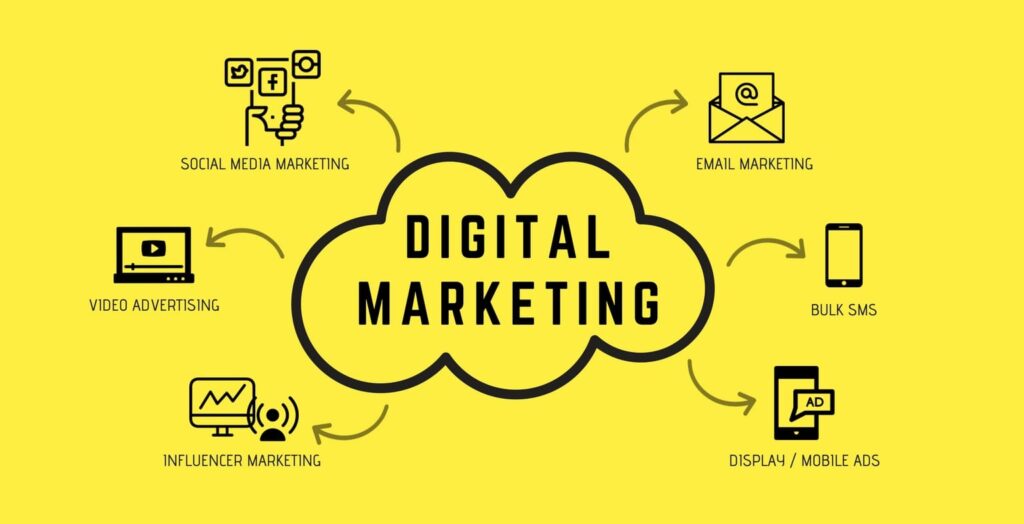
What is digital marketing?

Digital marketing, also known as online marketing, refers to advertising delivered through digital channels to promote brands and connect potential customers using the internet and other forms of digital communication such as: Search engines Websites Social media Email Mobile apps Text messaging Web-based advertising In-short, if a marketing campaign is using any of the above online media channels, it is digital marketing. Consumers today rely heavily on digital means to research products. Some 77% of customers research a brand online before engaging with it, according to research. Meanwhile, 51% of consumers say they use Google to research products before buying.

What is digital marketing? Read More »